

State Mandated Retirement Plans
Stay updated on your state's requirements.
Many states require employers to offer retirement benefits. Starting a Human Interest 401(k) can help you comply with legislation and avoid costly penalties.

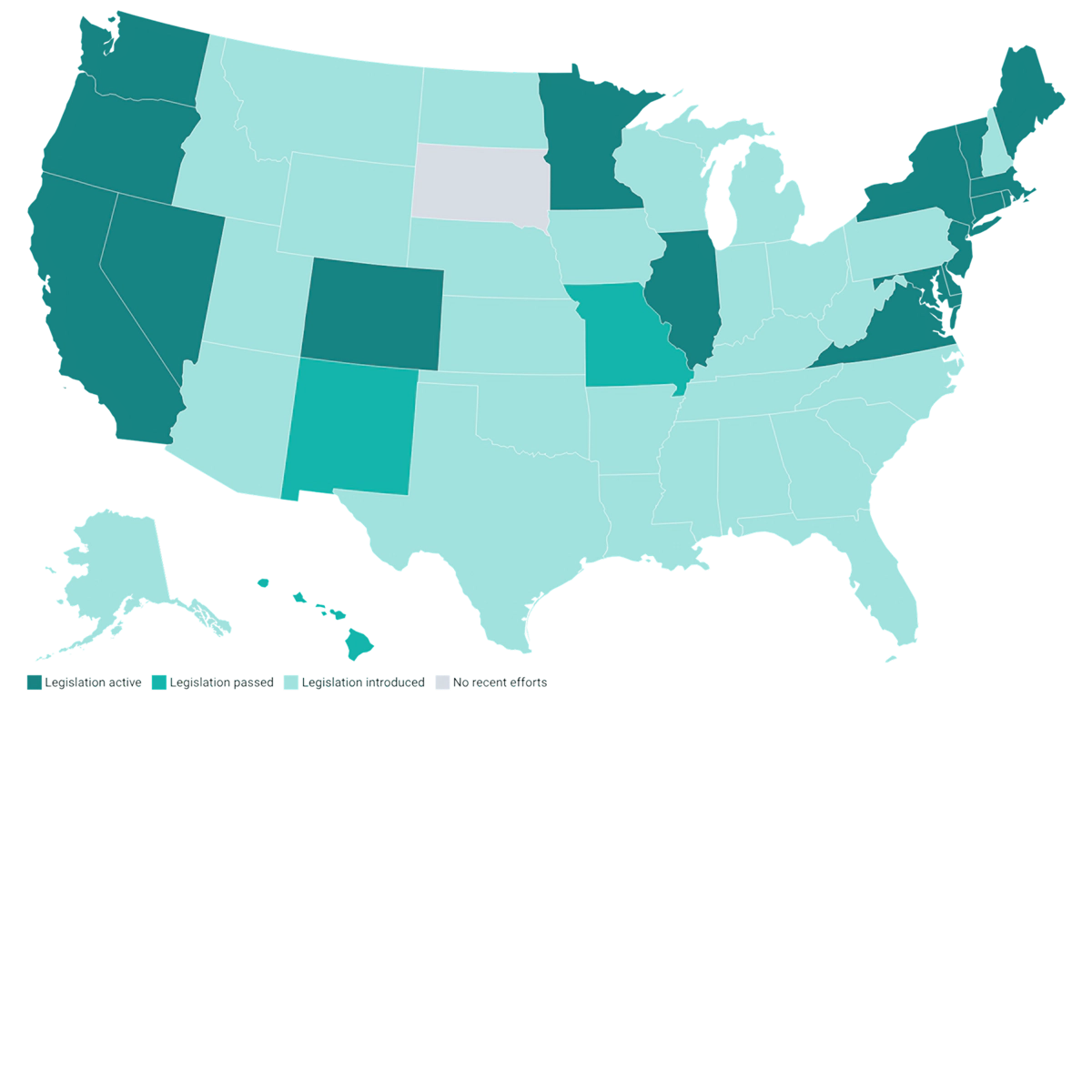
States with active legislation
California - CalSavers
Colorado - Colorado SecureSavings
Connecticut - MyCTSavings
Delaware - Delaware EARNS
Illinois - Illinois Secure Choice
Maine - Maine Retirement Investment Trust (MERIT)
Maryland - Maryland$aves
Massachusetts - Massachusetts CORE Plan
Nevada - Nevada Employee Savings Trust Program
New Jersey - RetireReady NJ
New York - New York Secure Choice Savings Program
Oregon - OregonSaves
Rhode Island - Rhode Island Secure Choice Retirement Savings Program
Vermont - VT Saves
Virginia - RetirePath Virginia
Washington - Washington Saves
States with passed legislation
Hawaii - Hawaii Retirement Savings Program
Minnesota - Minnesota Secure Choice Retirement Program
Missouri - MyRetirement Savings
New Mexico - New Mexico Work & Save and New Mexico Marketplace
Retirement Legislation
State mandate legislation is sweeping the country
More than 20 states have proposed state-mandated retirement plan legislation, and 17 states have active mandated plans.
What are state mandated retirement plans?
What are state mandated retirement plans?
State mandate overview
These programs require employers to provide access to retirement savings options. Employers may enroll their employees in a state-sponsored retirement program—or choose an employer-sponsored plan, such as a Human Interest 401(k) plan. Our 401(k) plans provide a flexible alternative to state-mandated options, ensuring your employees have robust retirement savings opportunities tailored to their needs.

How it works
Most state-mandated retirement programs provide Roth IRAs, with automatic enrollment for employees, which have key differences compared to 401(k) plans. Employees automatically contribute a percentage of wages via payroll deductions unless they opt out or choose their own election. Exemptions may apply to small businesses, new companies, or those already offering qualified retirement plans.

Potential fees & penalties
Employers may face significant penalties for non-compliance. Fines may be charged per eligible employee for failing to offer a retirement plan or properly enroll employees in a qualifying plan. State-sponsored programs may also carry fees that impact employers and employees. Management and recordkeeping fees typically range from 0.5% to 1% of the account balance, while investment fees can vary between 0.1% and 1% annually.
Traits of a typical state program

Limited plan structure
State plans often use Roth IRAs and auto-enroll employees at 3-5% of wages, with opt-out options.

Lower contribution limits
IRA: $7,500/year (under 50), $8,600 (over 50). 401(k): 24,500/year (under 50), $32,500/year (50-59 or 64+), $35,740 (60-63).

Employer roles and fees
Employers aren't required to contribute. Participant fees range from 0.5% to 1% annually.

Portability and management
Accounts are portable, and professional firms manage investment options and compliance.

Investment Options
State plans offer a limited range of investment options, typically including target-date funds, balanced funds, and conservative choices like money market or stable value funds.

Penalties for non-compliance
Employers who fail to comply with state mandates may face annual fines per eligible employee.
Get a smarter retirement solution with Human Interest
Get StartedState mandated retirement plans FAQ
